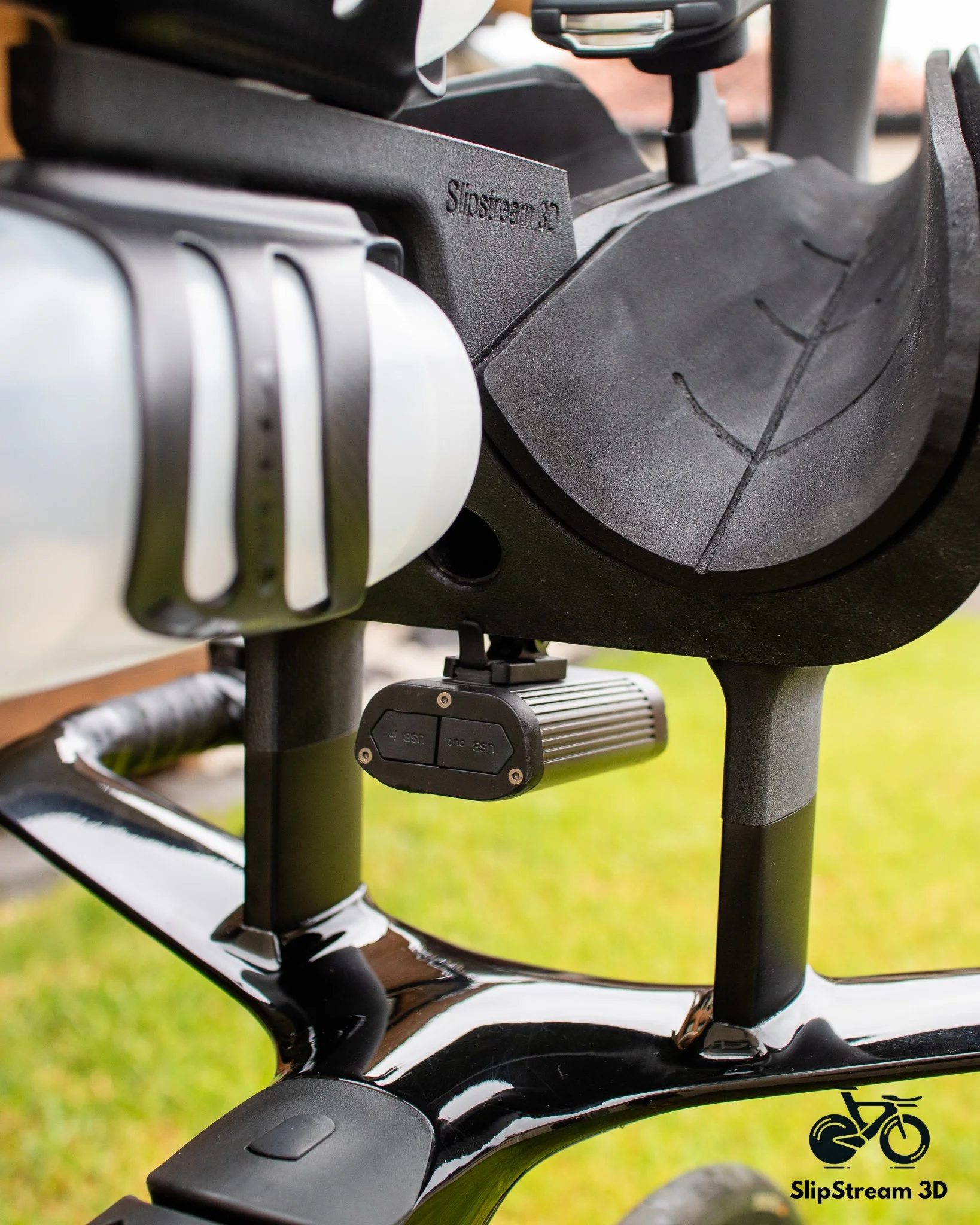
Where It Started – SlipStream 3D’s First Custom One-Piece Cockpit
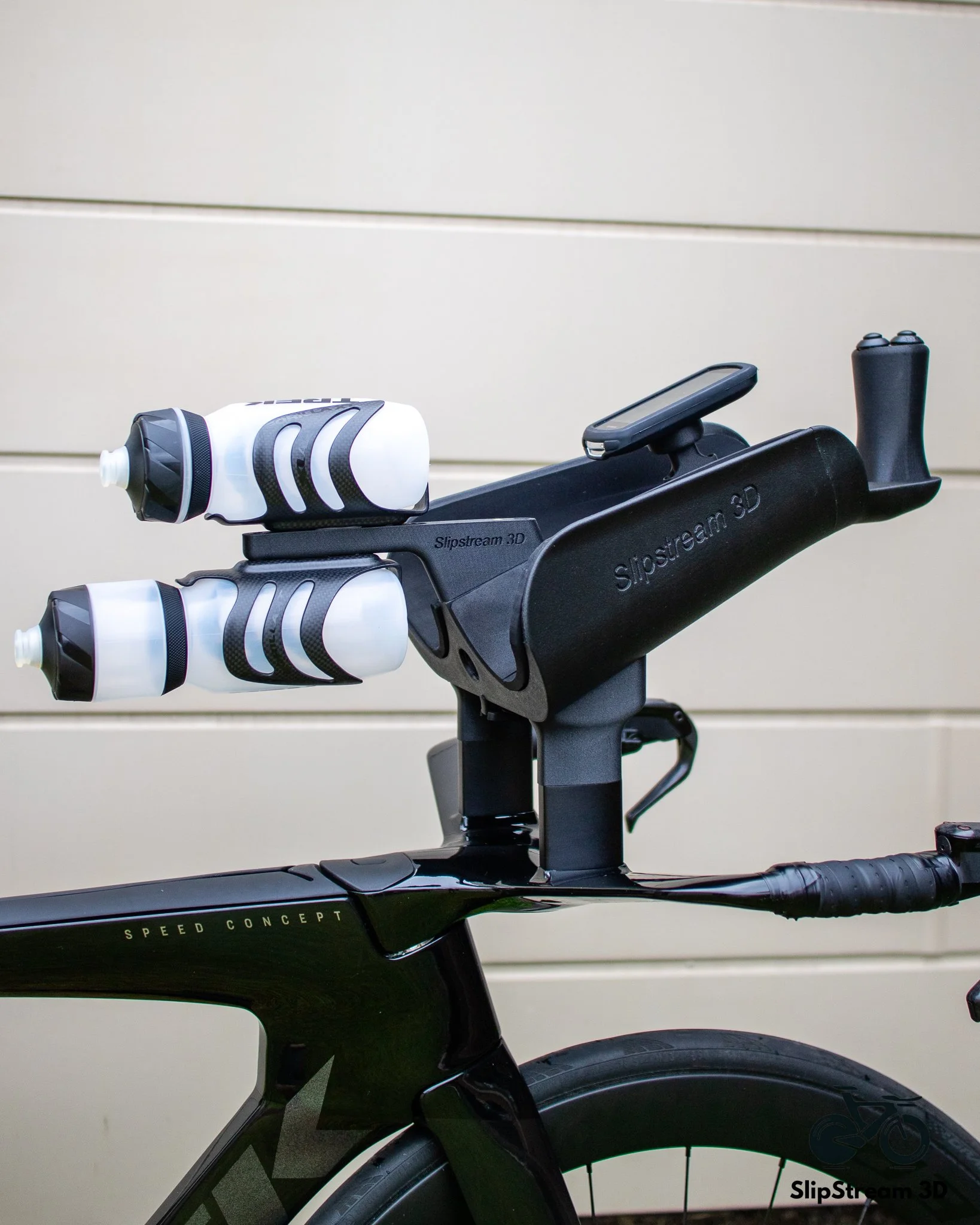
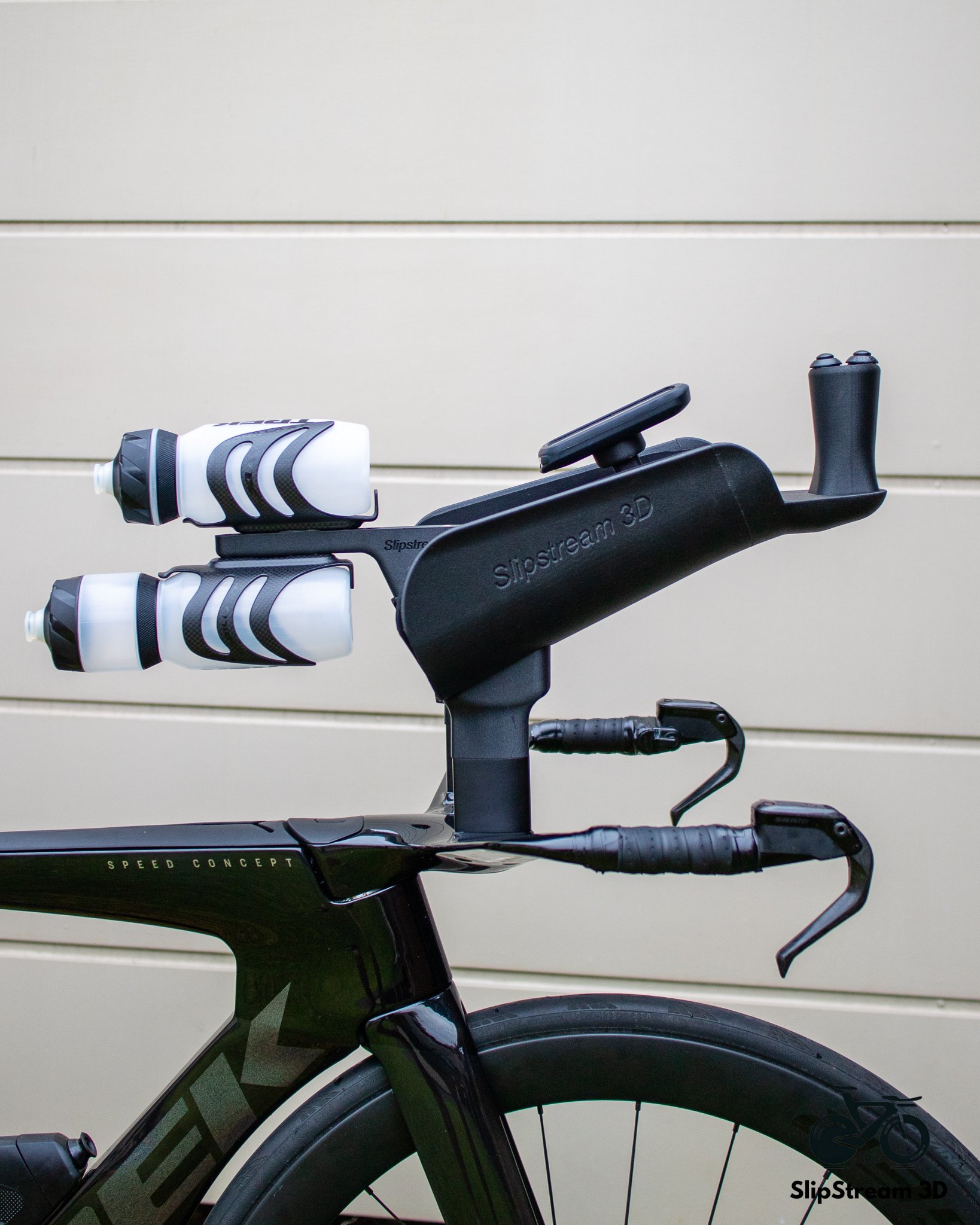
Back in December 2024, this Trek Speed Concept Gen 3 became the first complete custom cockpit developed by SlipStream 3D.
At the time, fully integrated 3D-printed triathlon cockpits were still relatively uncommon. Taking inspiration from the work being produced by Print4Watts, the goal was to explore how additive manufacturing could be used to build an entire front end around the rider rather than relying on a collection of standard components.
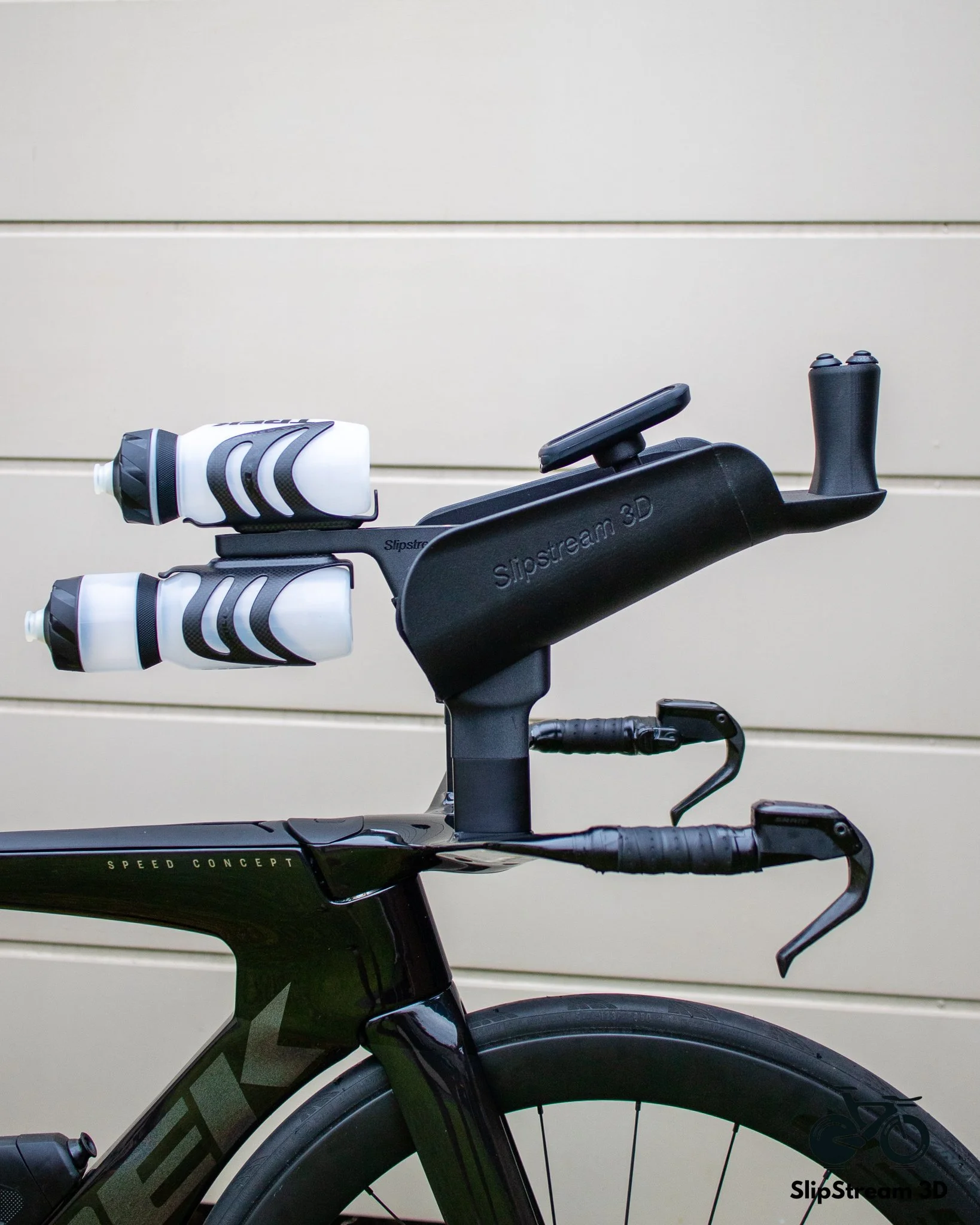
Integrated Hydration
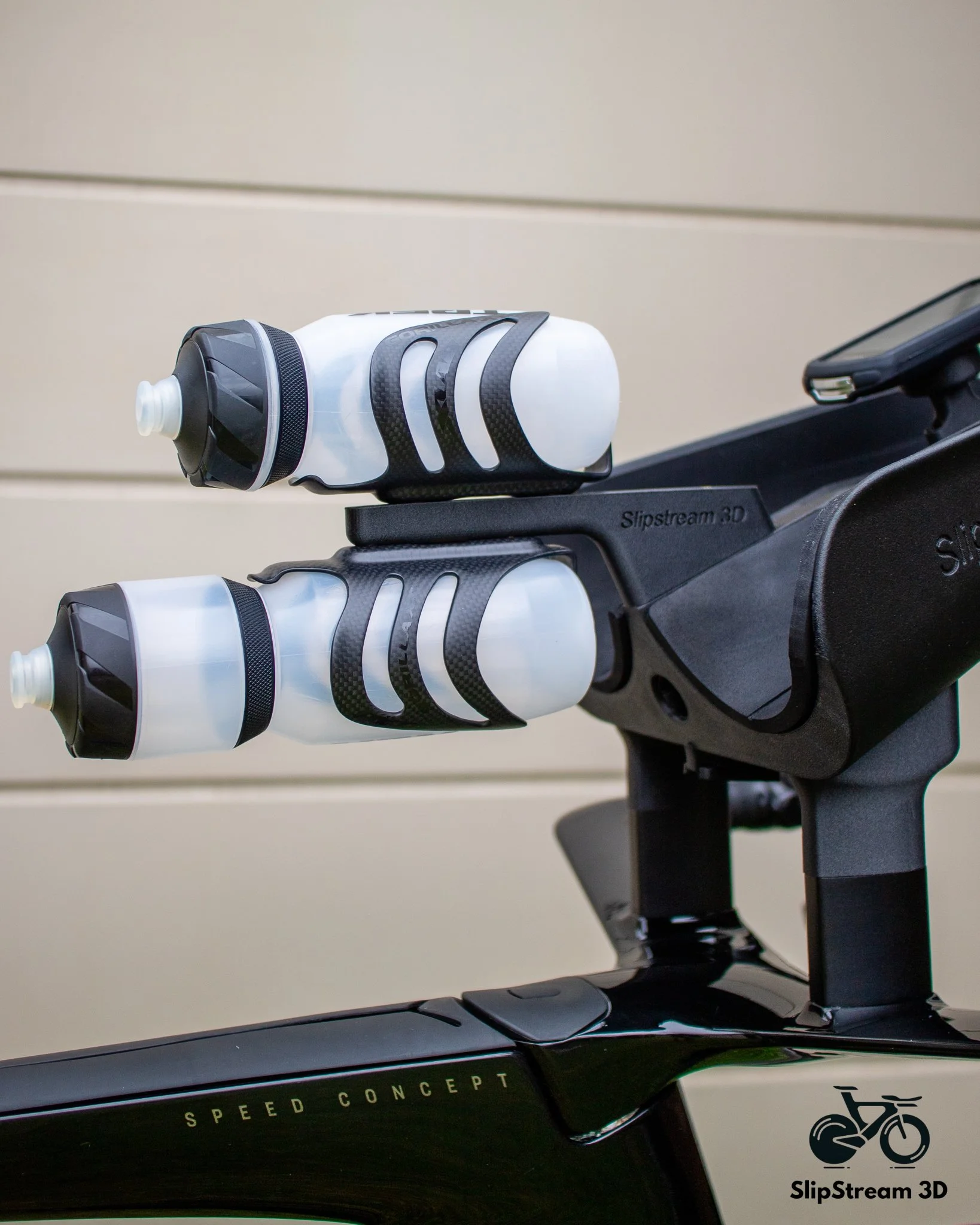
Long-course racing also meant carrying enough fluid without compromising the rest of the setup.
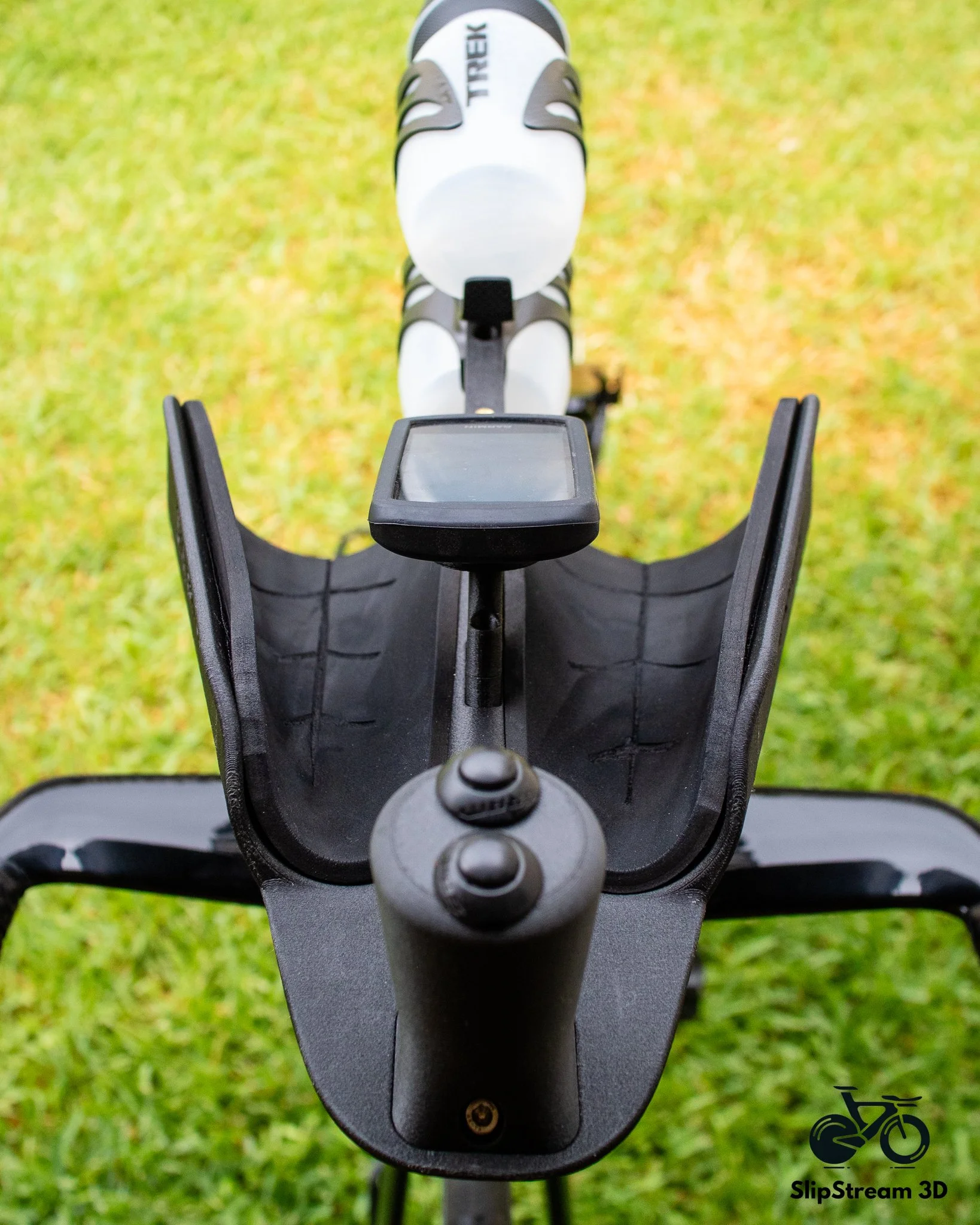
A dual BTA system was incorporated behind the arm supports, allowing two bottles to sit within the cockpit while keeping them easily accessible from the aero position.
The computer mount was positioned centrally between the rider's arms, creating a clear view of race data without requiring an additional external bracket.
The Starting Point
Looking back, this cockpit established many of the ideas that continue through SlipStream 3D's current custom builds: rider-specific geometry, mono-grip extensions, internal cable routing, integrated hydration and accessories designed as part of the cockpit rather than added afterwards.
The designs have evolved considerably since December 2024, but this Trek Speed Concept was where the custom cockpit project started.
One bike, one rider and a completely different approach to building the front end.
Built Around the Trek Speed Concept Gen 3
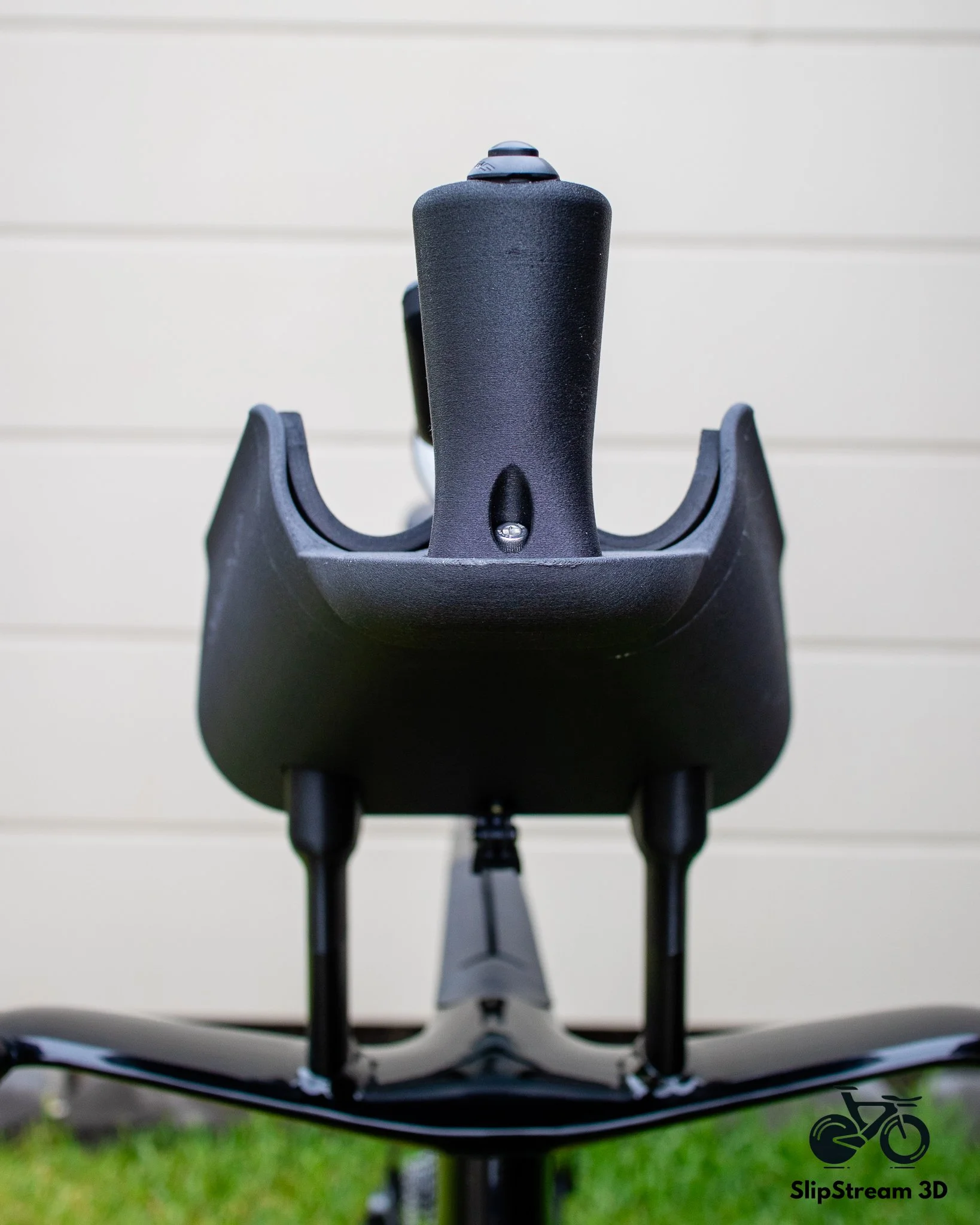
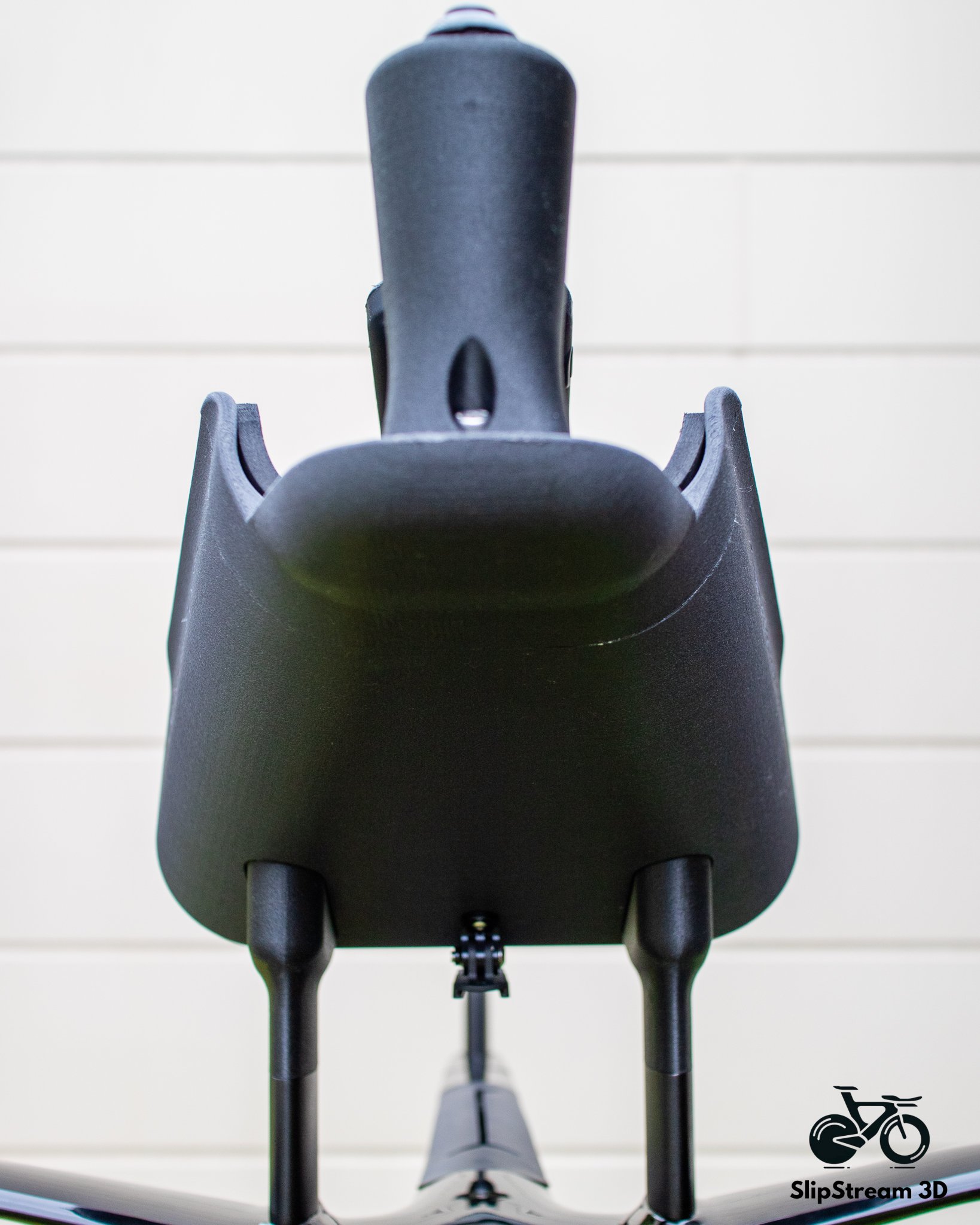
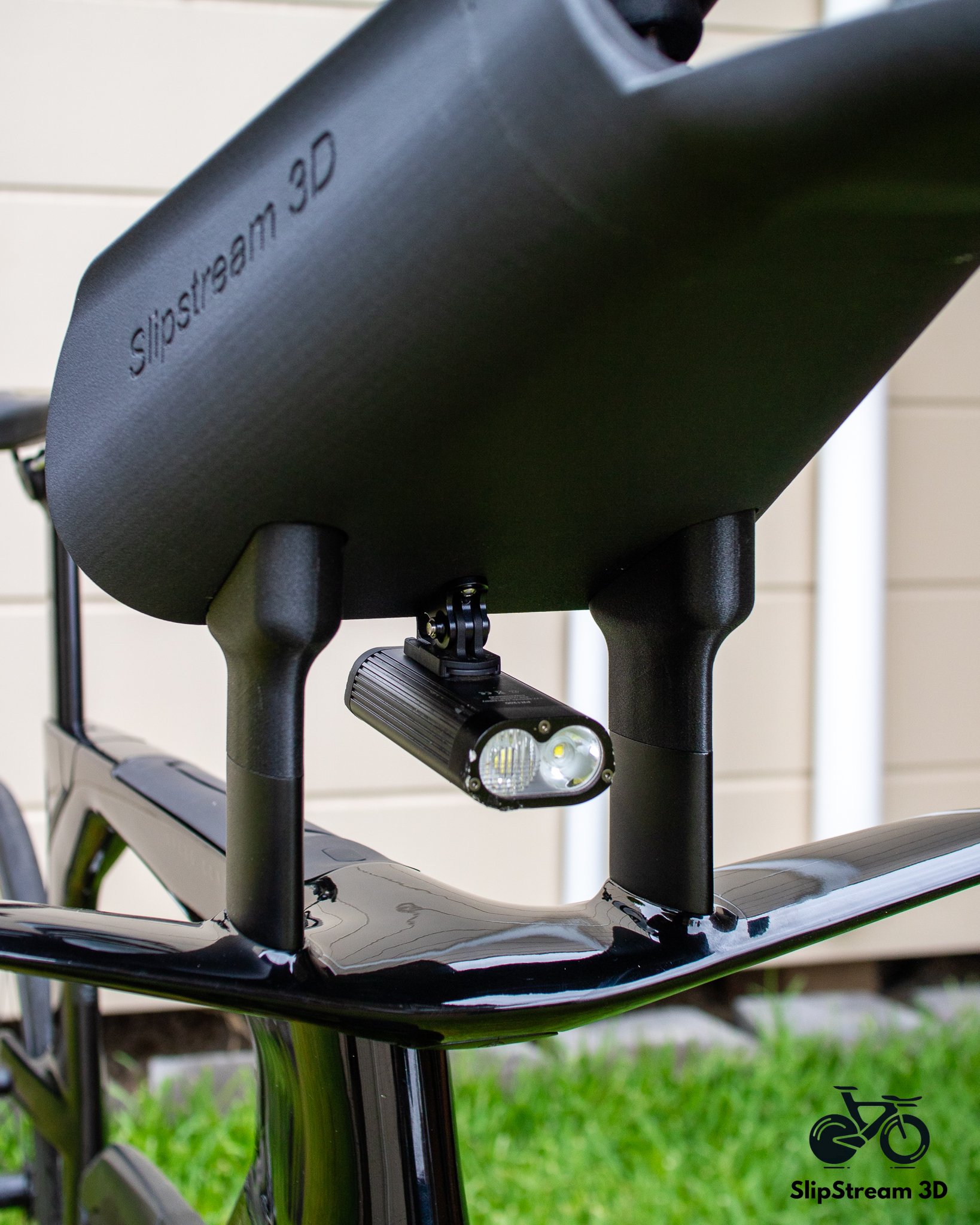
The cockpit was designed to mount directly to the Trek Speed Concept Gen 3 using custom riser adaptors, allowing the complete system to integrate with the original bike while giving far greater freedom over the rider's position.
The design brought several components together into one system:
Custom mono-grip extension
Trek Speed Concept Gen 3 riser adaptors
Internally routed electronic shifting cables
Integrated computer mount
Dual BTA hydration
Extended forearm support
Rider-specific hand and grip position
Rather than treating each component as a separate accessory, everything was designed to function as part of the cockpit.
Developing the Mono-Grip
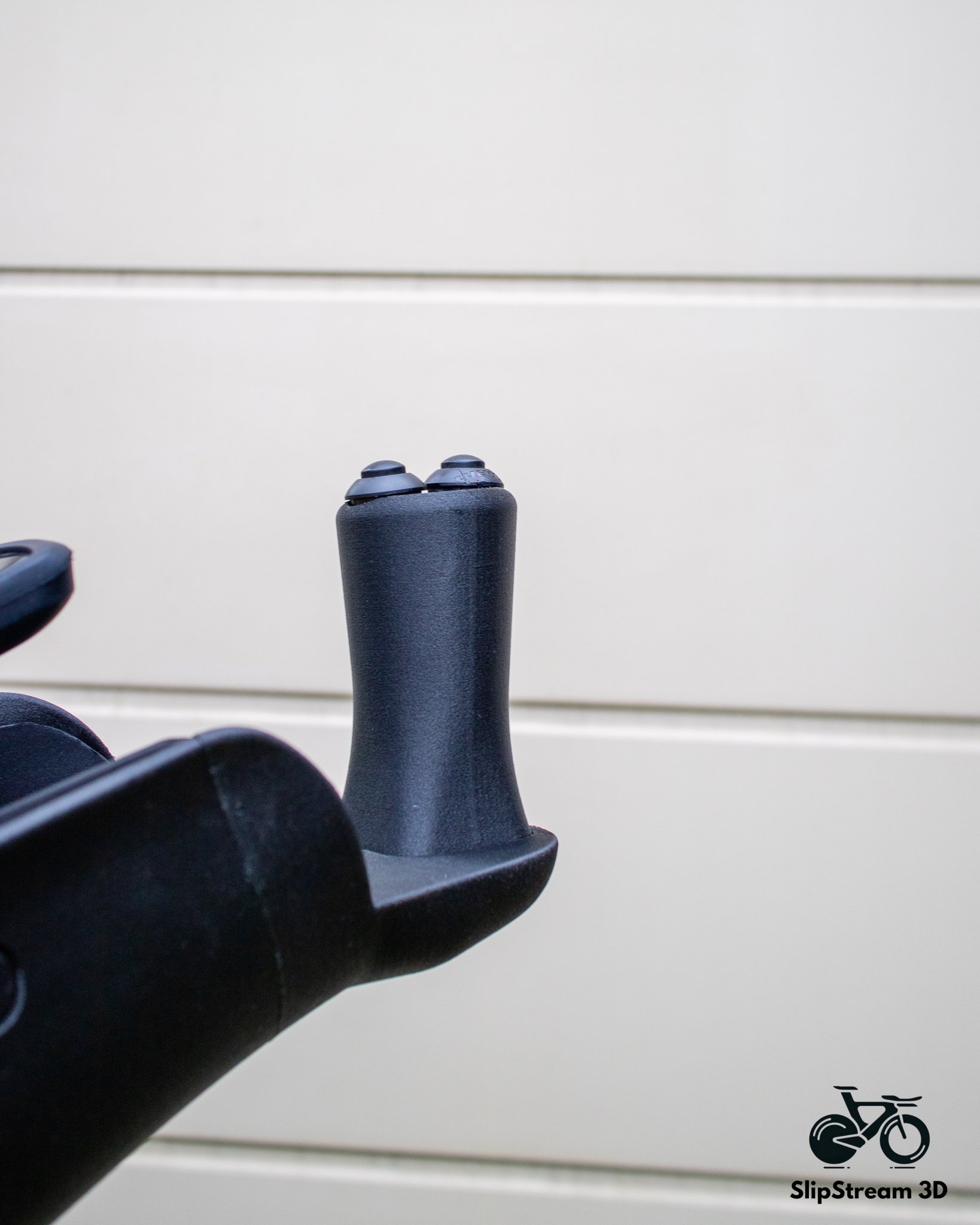
One of the key features of the build was the custom mono-grip.
The shape allowed both hands to settle into a consistent position while keeping the front of the cockpit compact. During development, the grip geometry was revised to improve hand comfort and create a more natural position for longer periods in aero.
The shift buttons were integrated directly into the grip, with the cabling routed internally through the cockpit to keep the finished system clean.